

The Unsung Heroes Behind The Music of C.A.C. Good Women Choir
Introduction
Behind the timeless songs and enduring ministry of the C.A.C. Good Women Choir stood a dedicated group of instrumentalists whose quiet faithfulness helped shape a sound that generations continue to cherish. These men, often unseen yet deeply impactful, played a vital role in the choir’s rise and lasting influence within indigenous gospel music.
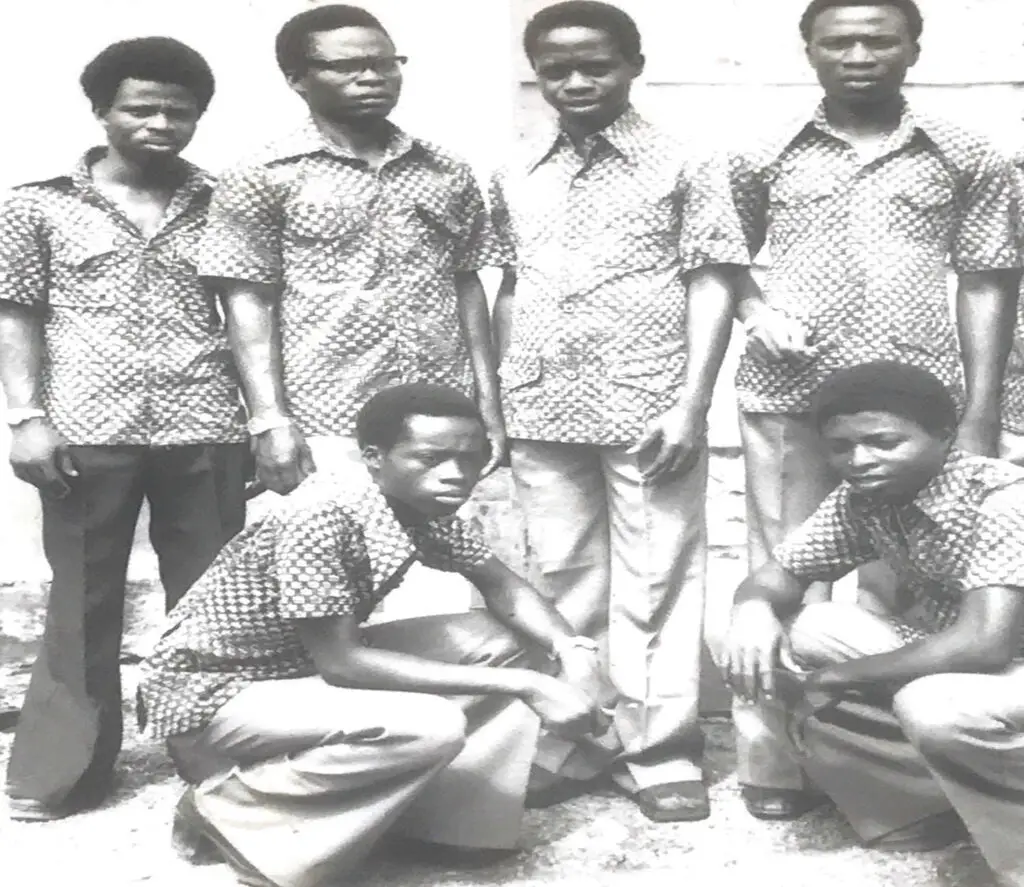
The instrumentalists whose images are remembered include Moses Sunmola, Olutimeyin, Eguntola, and Adebisi Oladapo, who stood from left to right, while Olusola Emmanuel and Olaniyi Olaoluwa were seated. Together, they formed the musical backbone of the choir, providing steady rhythm, structure, and spiritual sensitivity that complemented the choir’s vocal ministry.
One of the defining strengths of the C.A.C. Good Women Choir has always been simplicity. This simplicity was not accidental but intentional—rooted in wisdom and spiritual discernment. The choir’s music avoided unnecessary complexity in melodic progression, chord structures, and instrumental arrangement. Instead, it focused on clear melodies, heartfelt messages, and rhythmic accompaniments that supported worship rather than distracted from it.
The organ served as the only Western instrument for many years, while all other accompaniments were drawn from African percussion. This approach proved remarkably effective. By limiting instrumental complexity, the choir avoided the musical pitfalls that often plague many ensembles, such as wrong chord transitions, atonal clashes, and overcrowded arrangements. The result was music that was clean, spiritually resonant, and pleasant to the ear.
This indigenous rhythmic approach became a defining identity for the C.A.C. Good Women Choir. It gave their music a sound that was instantly recognizable—authentic, grounded, and deeply connected to African worship traditions. Their songs carried the soul of the people, remaining accessible and relatable, while still ministering profound spiritual truths. It is this authenticity that sustained the choir’s popularity across decades.
The session men worked quietly behind the scenes, yet their contribution was enormous. They helped translate vision into sound and ensured that the choir’s ministerial goals were fully expressed through music. Their discipline, humility, and understanding of the choir’s mission allowed the message of the gospel to shine without competition from excessive instrumentation.
Among the women in the choir, only two played an instrument—the agogo (bell). This simple instrument functioned as a rhythmic anchor, acting as a sledge that held the tempo steady and unified both voices and percussion. Its restrained use further emphasized the choir’s commitment to simplicity and order in worship.
A notable development in the choir’s musical journey occurred in 1977 during preparations for their second album, “Kaye Koyo.” At this point, the Talking Drum (Gangan) was introduced to accompany the existing traditional instruments. The producer believed the talking drum would add depth, flavor, and a stronger traditional expression to the songs. This addition enriched the music without compromising its simplicity, reinforcing the choir’s indigenous identity.
Another milestone came in 1988 with the album “Gba Akoso,” when the guitar was introduced as the second Western instrument, following the organ. Even with this inclusion, restraint remained the guiding principle. The guitar was used carefully to support, not overshadow, the choir’s vocal message.
Today, these instrumentalists no longer back Mama D.A. Fasoyin’s ministrations due to age. However, their legacy lives on. Some still appear in archival videos of the C.A.C. Good Women Choir, serving as visual reminders of a generation that gave its best to God. Sadly, only two of them are still alive, making their contributions even more precious in remembrance.
Their story teaches a powerful lesson: lasting ministry is often built by those who labor faithfully behind the scenes. Through simplicity, discipline, and devotion, these session men helped create a sound that continues to bless lives and glorify God.
Read more stories
Listen To More Tracks

Subscribe Now
Don’t miss our future updates! Get Subscribed Today!
Thank you!
You have successfully joined our subscriber list.
©2024. Berachah Music All Rights Reserved.